

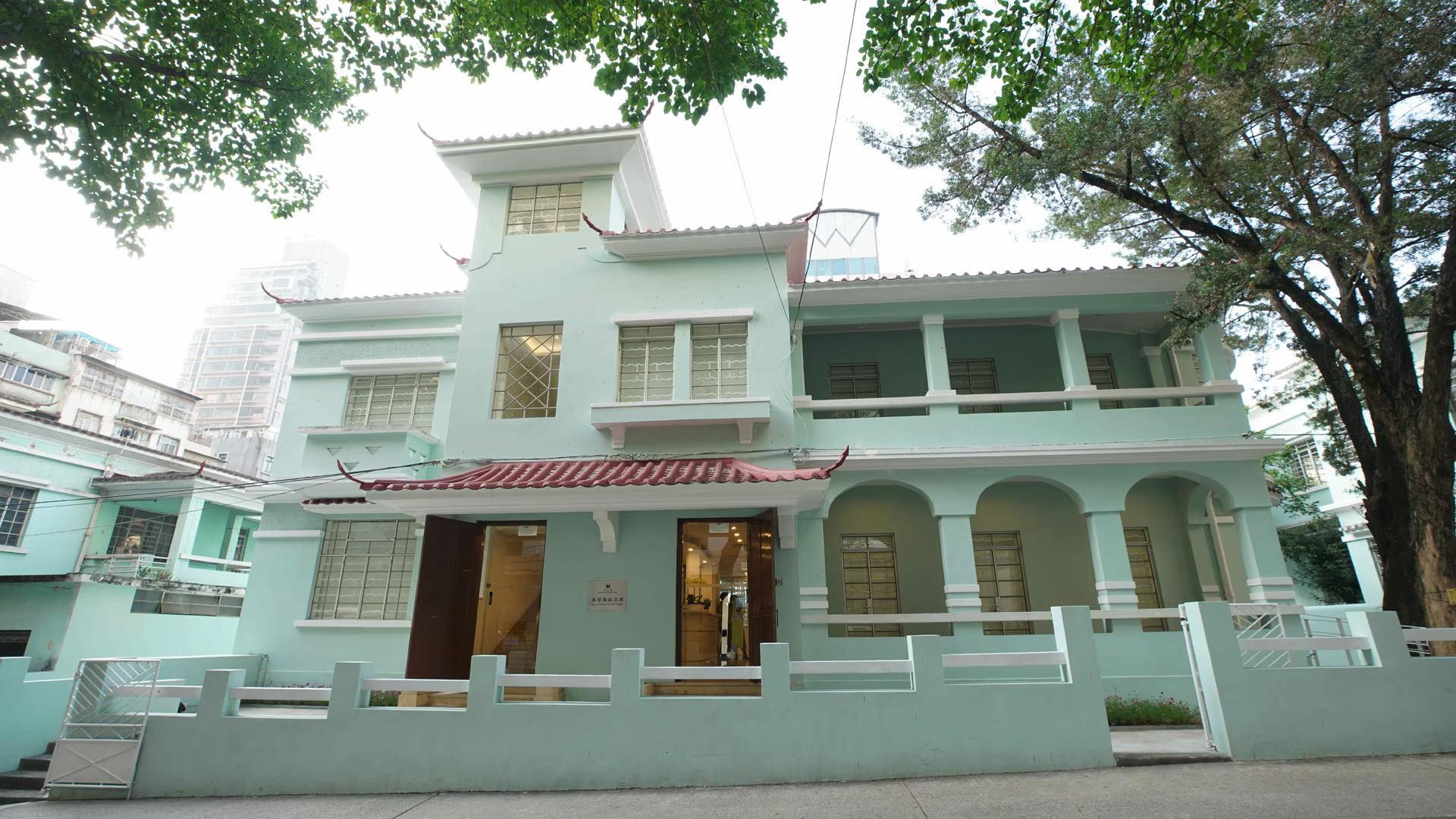

Xian Xinghai is hailed as “the people’s musician” and is renowned for his great achievements in the contemporary music history of China. Born into a fishing family in Macao, he meticulously sought for musical excellence, ingeniously integrated Chinese and Western music techniques and created many well-known masterpieces over his brief 40 years, all brimming with the cultural inclusiveness of Macao. One of his signature pieces, the Yellow River Cantata, was widely sung during the War of Resistance against Japanese Aggression, where it boosted the morale and stimulated patriotism of the Chinese across the nation.
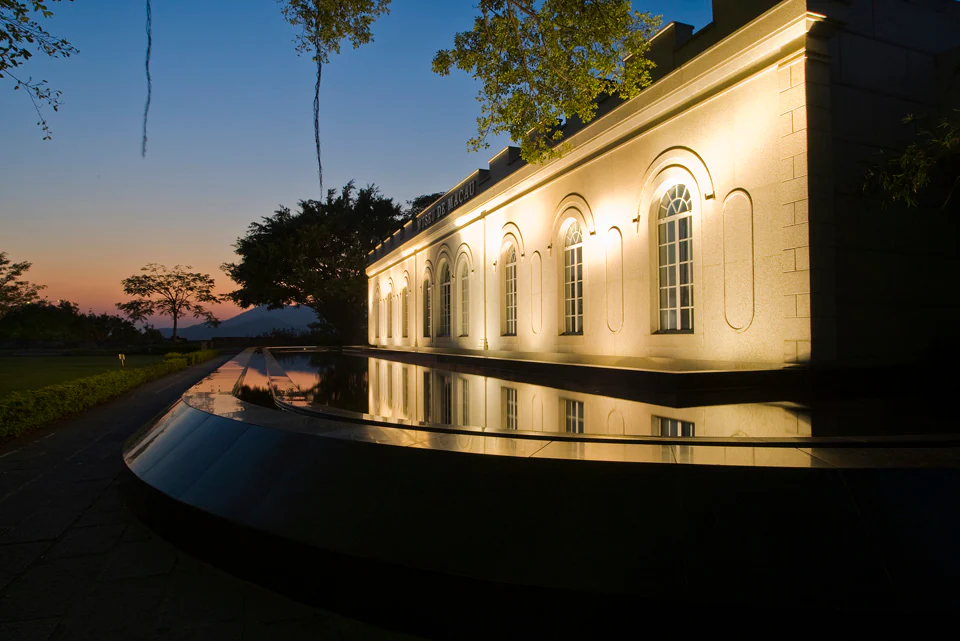
The Macao Museum is a historical and cultural museum with a vast number of objects of great historical value, which demonstrates the way of life and cultures of the various communities which have been inhabited the city for ages.
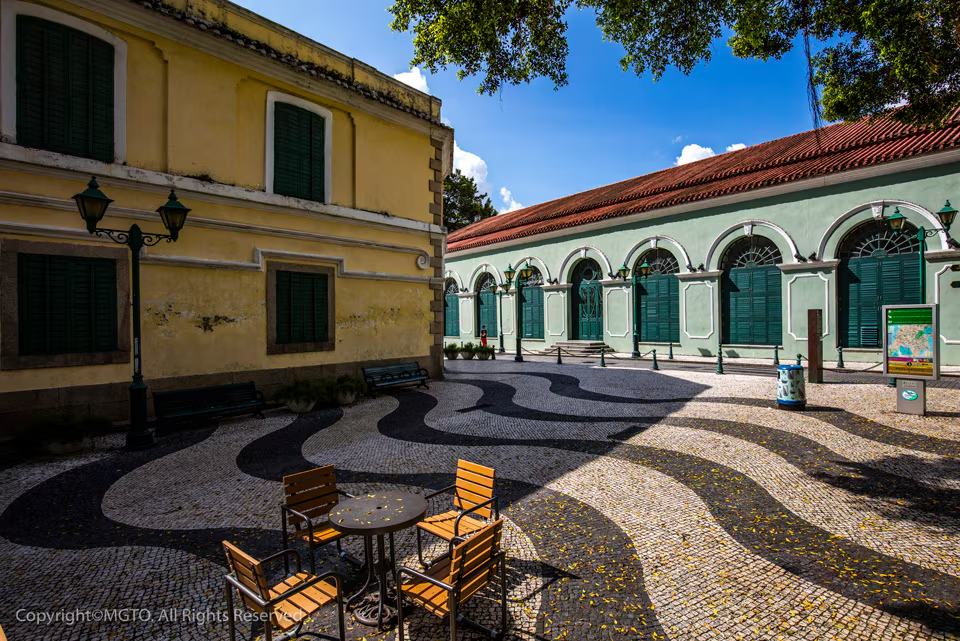
St. Augustine's Square gathers various classified buildings, such as St. Augustine's Church, Dom Pedro V Theatre, St. Joseph's Seminary and Sir Robert Ho Tung Library. The cobblestone pavement unifies the area and reflects a traditionally Portuguese streetscape.
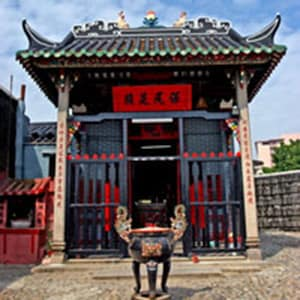
Built in 1888, this temple is dedicated to the worship of Na Tcha. This small traditional Chinese temple stands close to the remains of the principal Jesuit enterprise of the region, presenting a dialectic of western and Chinese ideals, as one of the best examples of Macao's multicultural identity and religious freedom.
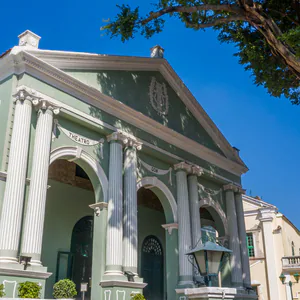
Built in 1860 as the first western-style theatre in China with a seating capacity of 300, this has survived as a highly significant cultural landmark in the context of the local Macanese community and remains a venue for important public events and celebrations.
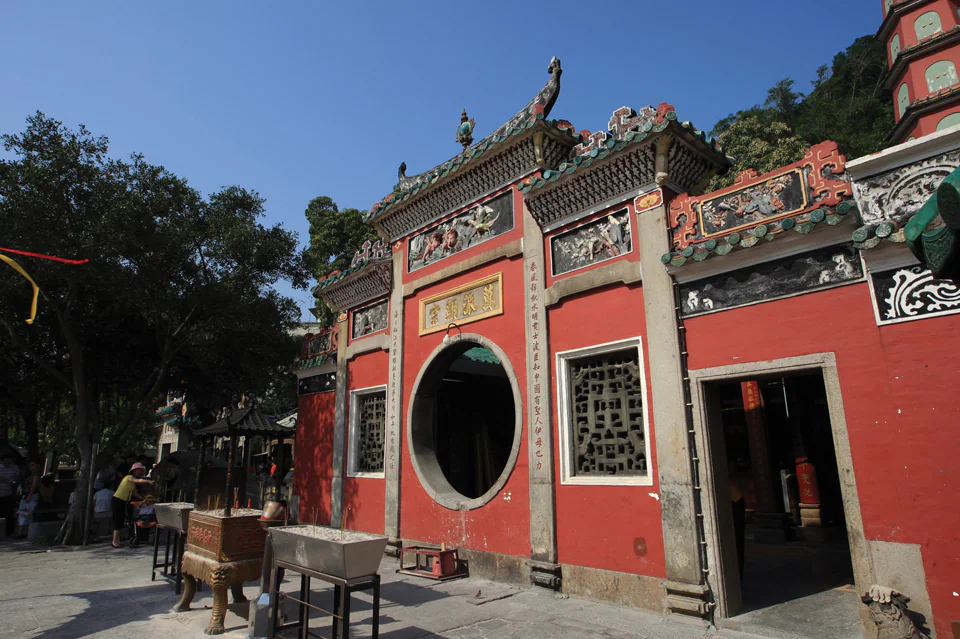
A-Ma Temple already existed before the city of Macao came into being. It consists of the Gate Pavilion, the Memorial Arch, the Prayer Hall, the Hall of Benevolence, the Hall of Guanyin, and Zhengjiao Chanlin (a Buddhist pavilion). The variety of pavilions dedicated to the worship of different deities in a single complex make A-Ma Temple an exemplary representation of Chinese culture inspired by Confucianism, Taoism, Buddhism and multiple folk beliefs.
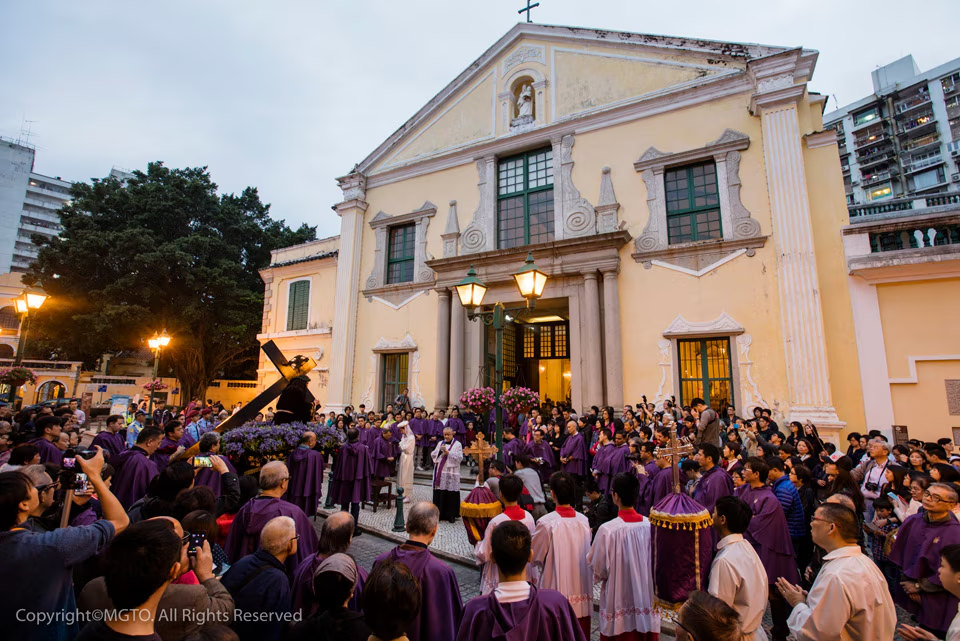
First established by Spanish Augustinians in 1591, this church maintains the tradition of organizing one of the most popular processions through the city, the Easter Procession, involving thousands of devotees. In times past, during heavy rain, the priests used to reinforce the rooftop with fan palm leaves. Seen from afar, these leaves appeared to be dragon's whiskers floating in the wind, hence the local Chinese named it Long Song Miu (Temple of the Long-whiskered Dragon).

The Ruins of St. Paul's refer to the facade of what was originally the Church of Mater Dei built in 1602-1640, destroyed by fire in 1835, and the ruins of St. Paul's College, which stood adjacent to the Church. As a whole, the old Church of Mater Dei, St. Paul's College and Mount Fortress were all Jesuit constructions and formed what can be perceived as the Macao's "acropolis". Close by, the archaeological remains of the old College of St. Paul stand witness to what was the first western-style university in the Far East, with an elaborate academic programme. Nowadays, the facade of the Ruins of St. Paul's functions symbolically as an altar to the city.
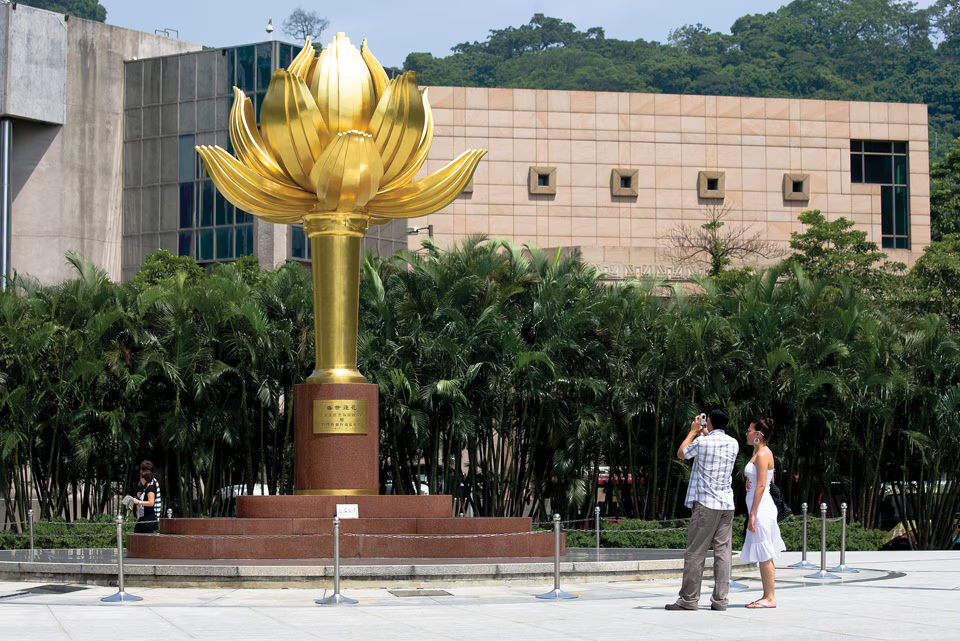
Standing in Lotus Square next to the Forum, the large sculpture of "Lotus Flower In Full Bloom" presented by the State Council of China in 1999, marks the return of sovereignty of Macao.
The sculpture, made of gilded bronze and weights 6.5 tons, is 6 meters high and the diameter of the flower is 3.6 meters at maximum. The major part is composed of a stem, petals and pistil, with a total of 16 components. The base of the flower consists of 23 pieces of red granite.
The lotus flower, which is in full bloom, symbolizes the everlasting prosperity of Macao. There are three layers of red granite at the base, which are in the shape of lotus leaves, signifying the Macao Peninsula, Taipa Island and Coloane Island.
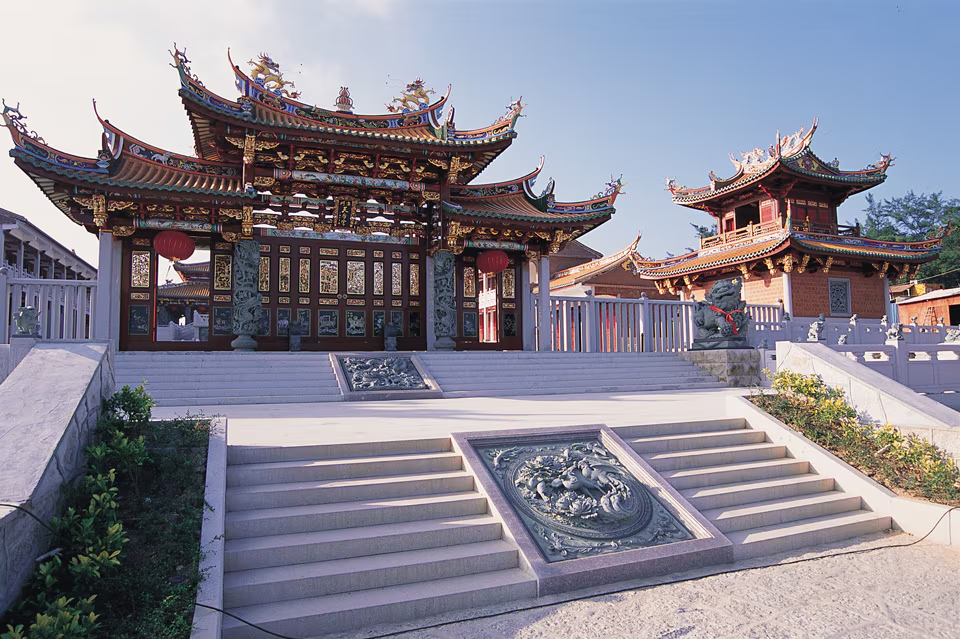
Close to the world's tallest statue of the goddess A-Ma (or named Tin Hau) on the mountaintop on Macao's Coloane Island, A-Ma Cultural Village is a 7,000-sq. m. complex which celebrates the legend of the Goddess of Seafarers. The village architecture mainly comprises a pavilion-style front gate, a carved marble altar, Tin Hau Palace, Dressing Hall along with Bell Tower and Drum Tower. The grand complex attracts A-Ma devotees and interested tourists alike for a visit. Nearby, visitors can refresh themselves at the park next to the village, or follow the hiking trail up to the magnificent A-Ma Statue on hill top and enjoy a captivating view of the island.
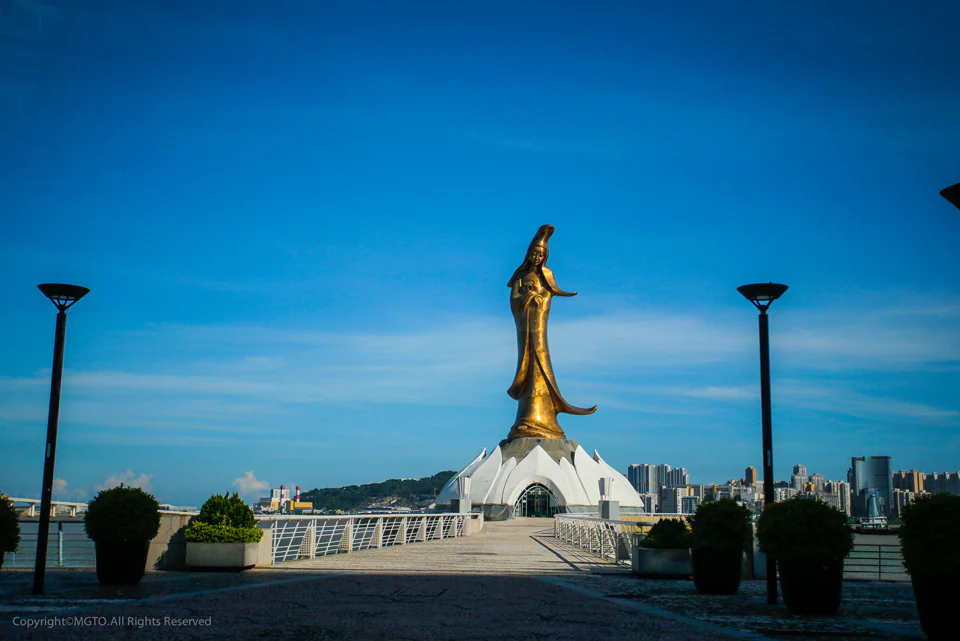
Located on the Outer Harbour, this statue, dedicated to Goddess of Kun Iam (Goddess of Mercy) is 20 meters tall and made of special bronze. The dome shape base like a lotus flower, is an ecumenical centre where information is available on Buddhism, Taoism and Confucianism.
Souvenirs and Cultural Institute publications are available for sale.
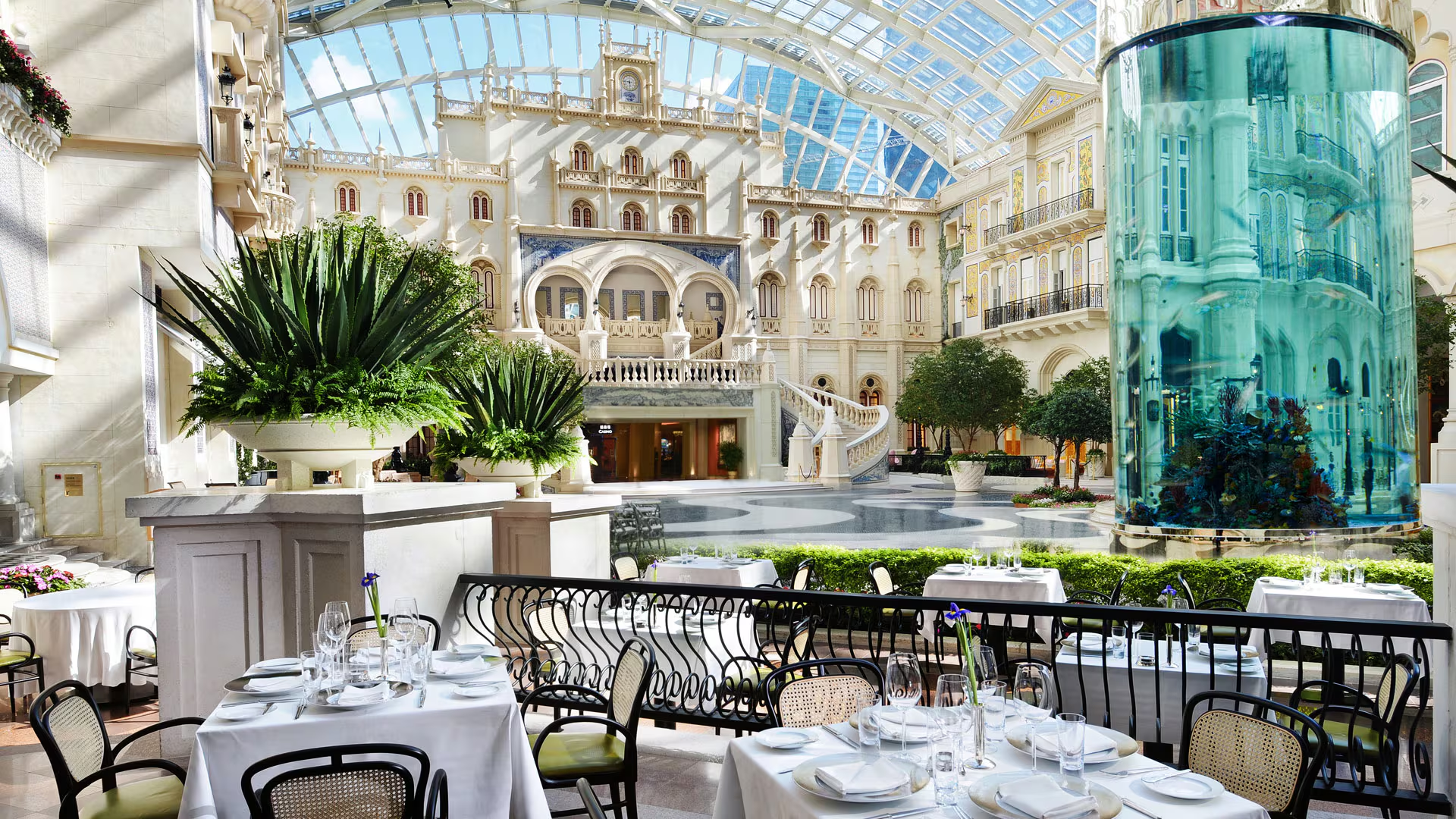
At the very heart of MGM MACAU lies the Grande Praça, an awe-inspiring homage to old-world Europe and Macau’s Portuguese heritage. The wall design on the north side of the Grande Praça is fashioned after Estação Rossio, Lisbon’s central rail station, to capture the most quintessential cultural attributes of Portugal. Visitors can bask in shafts of soft sunlight shining down through the Grande Praça’s domed glass ceiling.
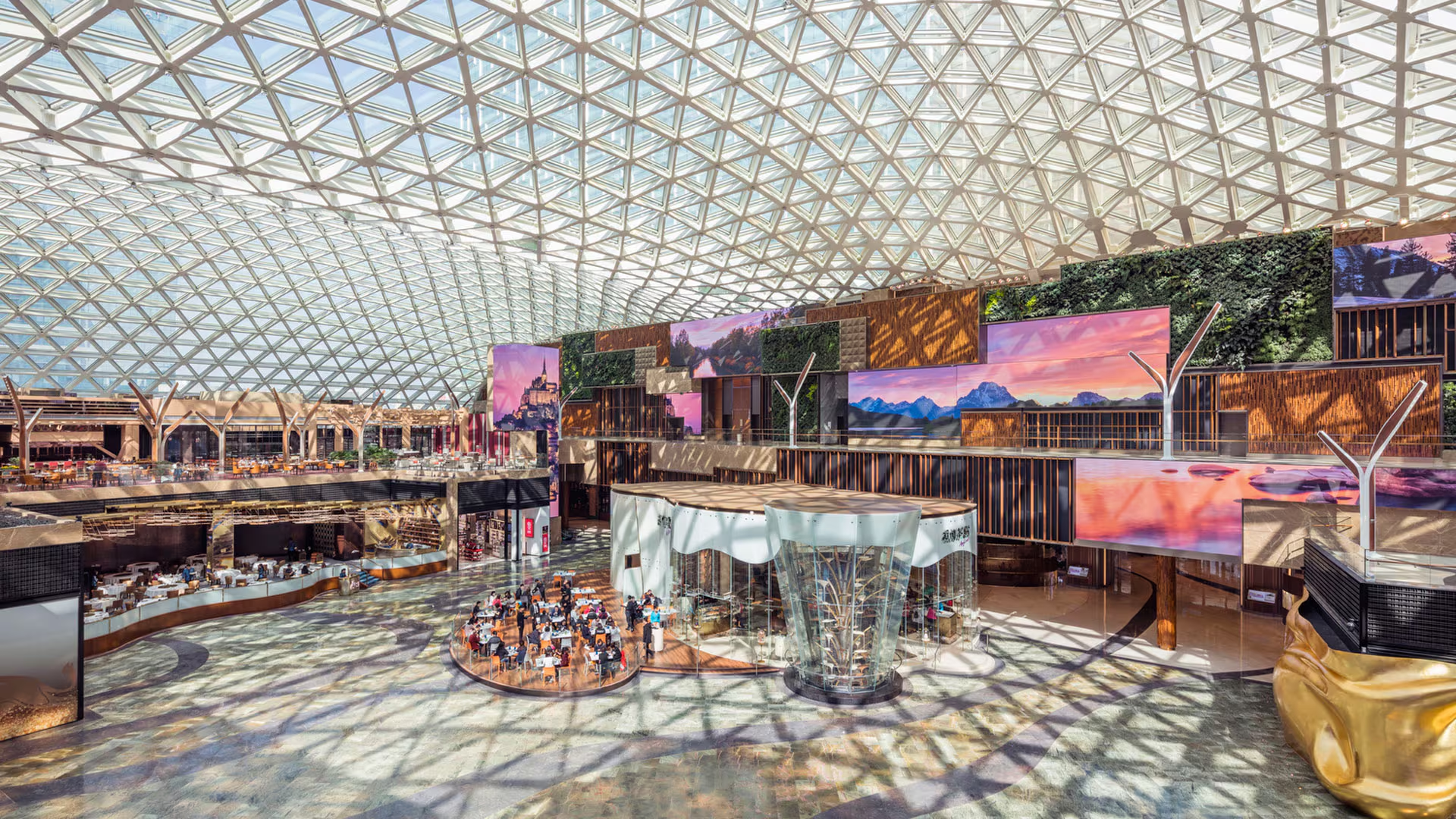
Located at the heart of MGM COTAI, the Spectacle is over 4-story high, spanning the length of a soccer field. It is a meticulously engineered column-free long-span diagrid structure. The Spectacle is the record holder of the largest free-span gridshell glazed roof (self-supporting), winning Macau's first architectural and structural GUINNESS WORLD RECORDS title.
The Spectacle features 25 LED screens in various sizes, that display an array of unique digital art pieces collected from around the globe which take on a combination of nature, art, music, language and culture elements. The innovative digital artwork is bound to invite visitors to explore the world from different perspectives.
The theme of “Art in Nature” expands beyond digital media, into other elements of the Spectacle interior. Complementing the technology is the world’s largest indoor art garden, dubbed Nature’s Art, housing more than 100,000 plants. The space will seem to be alive, continually evolving and responding to changing conditions such as visitor behaviors, weather, time of day or season, which will provide an immersive, multi-dimensional sensory experience.
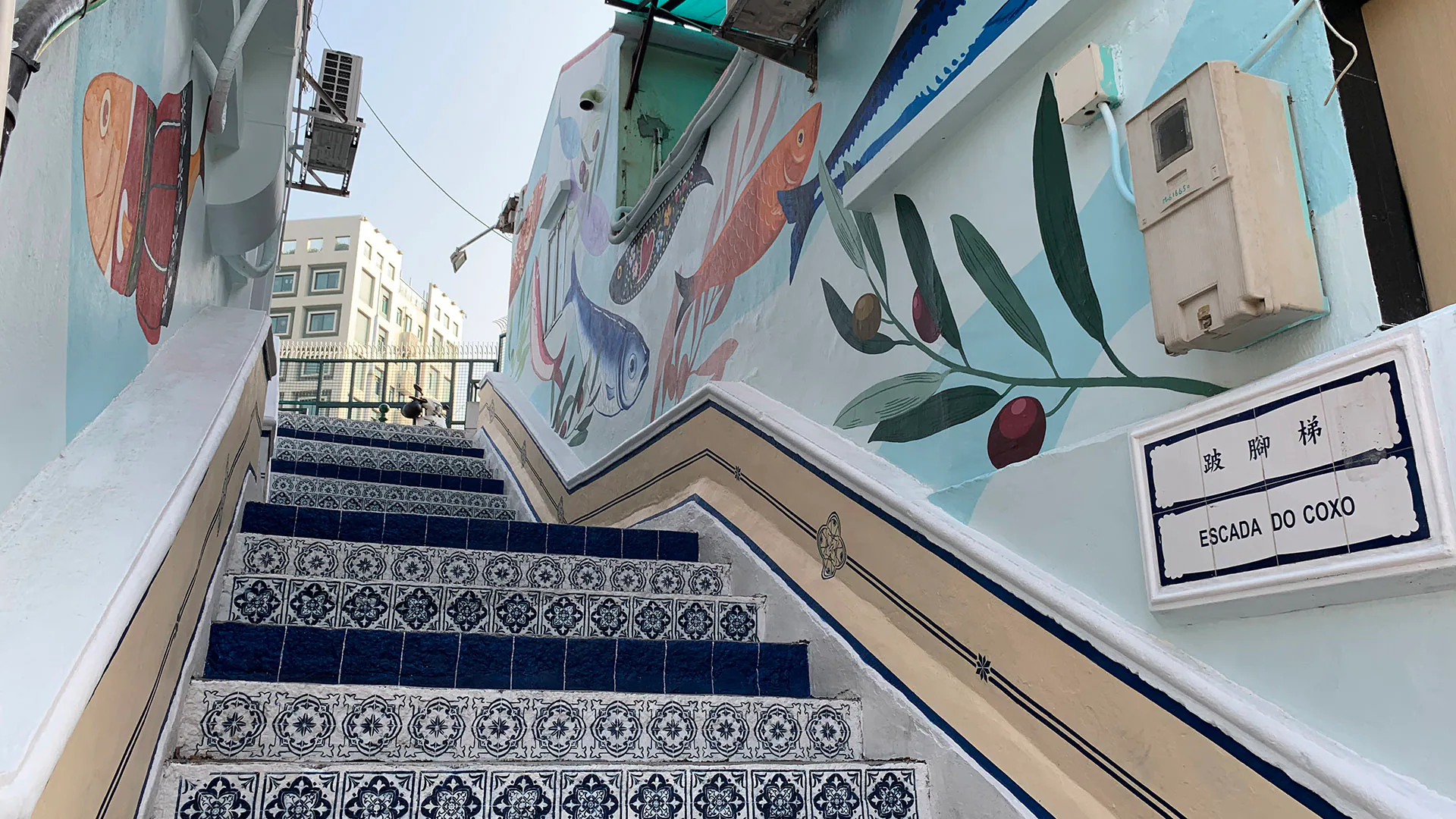
Macao artists Vitorino Vong and Jing Daan Wai paint new creation based on the Portuguese elements.
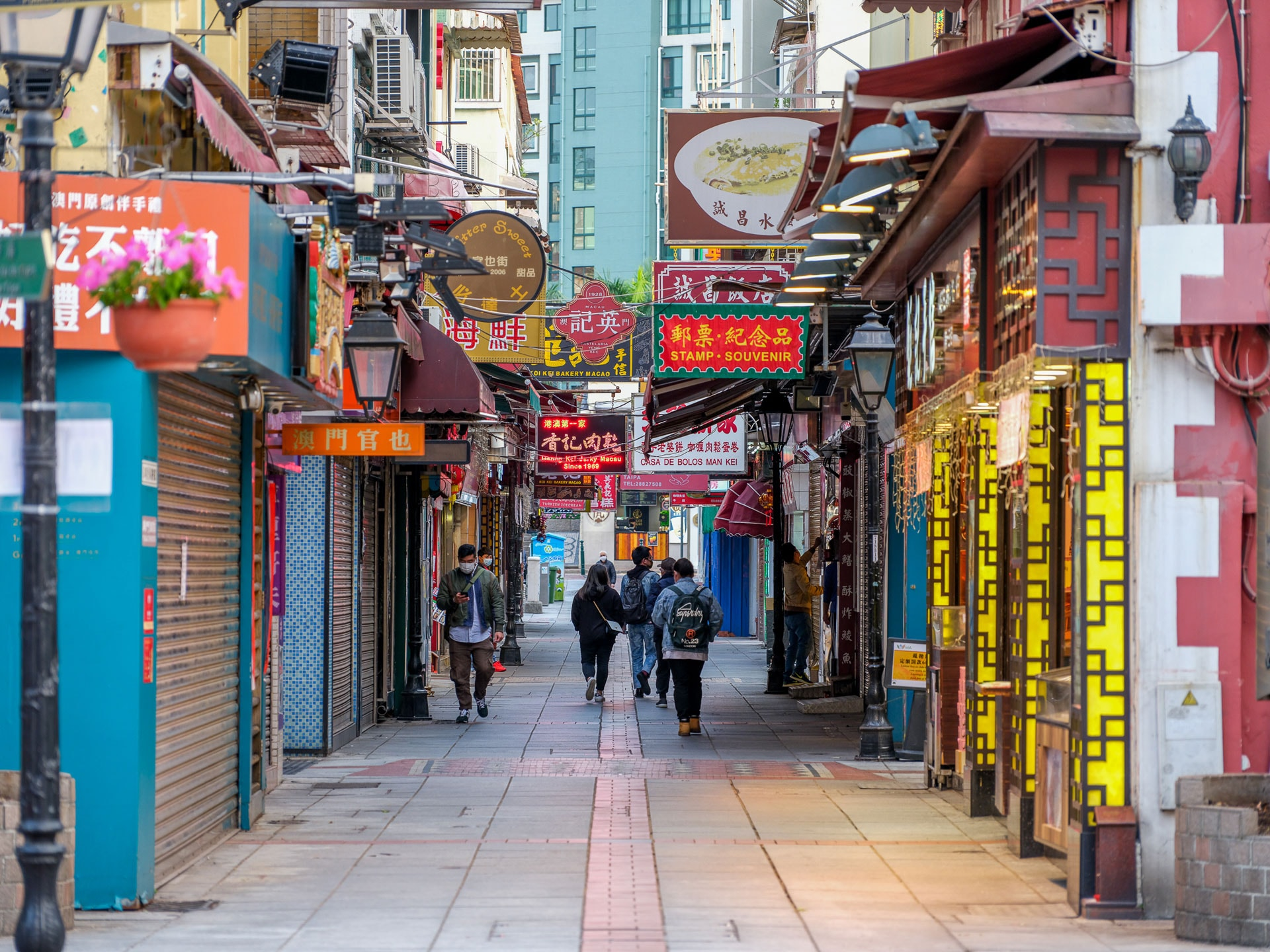
It is a narrow but bustling pedestrian street in the heart of Taipa village. Walking on the street, you will see the original community of the Island and find countless famed old restaurants that offer plenty of traditional cuisines. This small maze of narrow lanes and alleys is always packed with tourists. The Street was turned into the first pedestrian zone in Macao in 1983. Since then, it becomes a popular place for shops selling desserts, almond biscuits, egg rolls, coconut flakes and peanut candies, some of which you can buy as souvenirs. Built in the early 19th century, the Old Market is now reincarnated as a local cultural hub that adds vibrancy to this neighbourhood – the interesting Taipa Flea Market sets up stalls every Sunday in the square, where you can find many pretty hand-made items. It’s definitely an attraction that you can’t afford missing.